Animals That Start With E: Names & Description
Finding animal names that begin with the letter E can be surprisingly interesting. While familiar names like elephant, eagle, elk, and emu may come to mind first, the animal kingdom has many more fascinating E animals to discover. From mammals and birds to reptiles, fish, and insects, this list introduces a wide variety of creatures from different habitats around the world. Whether you’re building an animal A–Z list, helping children learn new vocabulary, or simply exploring wildlife, these animals that start with E offer plenty of interesting discoveries.
Why Knowing Animals Starting With E Is Helpful
Learning the names of animals that start with E is a simple and engaging way to expand vocabulary while discovering more about wildlife. It can help children and students with alphabet activities, school projects, spelling exercises, and animal-themed learning. For nature lovers and trivia fans, exploring E animals also introduces lesser-known species and highlights the incredible diversity of the animal kingdom. Knowing these names makes it easier to recognize, describe, and talk about different creatures in everyday conversations and educational settings.
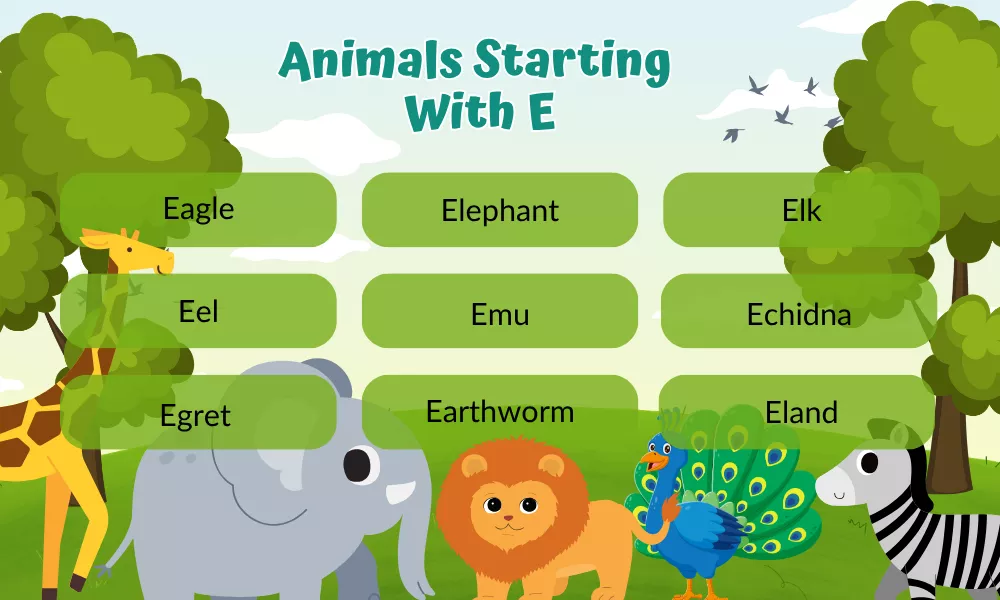
Common Animals That Start With E
- Eagle
Habitat: Mountains, forests, grasslands, and coastal areas
Diet: Fish, small mammals, birds, and reptiles
Description: A powerful bird of prey known for its sharp eyesight, strong talons, and hooked beak. - Elephant
Habitat: Grasslands, forests, and savannas of Africa and Asia
Diet: Grass, leaves, bark, fruits, and roots
Description: The largest land animal, recognized by its trunk, large ears, and tusks. - Elk
Habitat: Forests, mountains, meadows, and grasslands
Diet: Grass, leaves, bark, and shrubs
Description: A large member of the deer family with impressive antlers in males. - Emu
Habitat: Grasslands, woodlands, and open plains of Australia
Diet: Plants, fruits, seeds, insects, and small vertebrates
Description: A large, flightless Australian bird with long legs and a long neck. - Echidna
Habitat: Forests, grasslands, deserts, and rocky areas of Australia and New Guinea
Diet: Ants, termites, and other small invertebrates
Description: A spiny egg-laying mammal with a long snout and sticky tongue. - Eland
Habitat: Savannas, grasslands, and woodland regions of Africa
Diet: Grass, leaves, fruits, and shoots
Description: One of Africa’s largest antelopes, known for its large body and spiral-shaped horns. - Eel
Habitat: Oceans, rivers, lakes, and coastal waters
Diet: Fish, crustaceans, worms, and other small aquatic animals
Description: A long, snake-like fish found in both freshwater and marine environments. - Egret
Habitat: Wetlands, marshes, lakes, rivers, and coastal areas
Diet: Fish, frogs, insects, and crustaceans
Description: A slender wading bird often recognized by its long legs and white feathers. - Eider
Habitat: Arctic and northern coastal waters
Diet: Mollusks, crustaceans, and other marine invertebrates
Description: A large sea duck adapted to cold environments. - Earthworm
Habitat: Moist soil, gardens, forests, and farmland
Diet: Decaying leaves, organic matter, and soil microorganisms
Description: A segmented worm that helps improve soil quality through its burrowing and feeding activities. - Earthstar
Habitat: Forest floors, grasslands, and areas rich in decaying plant material
Diet: Decaying organic matter
Description: A group of unusual fungi with star-like outer layers. - Earwig
Habitat: Gardens, forests, leaf litter, and damp areas
Diet: Plants, decaying vegetation, insects, and small organisms
Description: A small insect with distinctive pincers at the end of its abdomen. - Earless Seal
Habitat: Oceans, beaches, sea ice, and coastal waters
Diet: Fish, squid, crustaceans, and other marine animals
Description: A group of seals that lack visible external ear flaps. - Eastern Gray Squirrel
Habitat: Woodlands, parks, gardens, and urban areas
Diet: Nuts, seeds, fruits, buds, and fungi
Description: A common tree squirrel known for its gray fur and bushy tail. - Eastern Cottontail
Habitat: Grasslands, fields, woodland edges, and gardens
Diet: Grass, leaves, herbs, and other vegetation
Description: A small rabbit with a distinctive white, cotton-like tail. - Eastern Chipmunk
Habitat: Forests, gardens, rocky areas, and suburban landscapes
Diet: Seeds, nuts, fruits, grains, and insects
Description: A small striped rodent that stores food in underground burrows. - European Hedgehog
Habitat: Grasslands, gardens, woodland edges, and hedgerows
Diet: Insects, worms, slugs, and other small animals
Description: A small nocturnal mammal covered in protective spines. - European Rabbit
Habitat: Grasslands, fields, forests, and agricultural areas
Diet: Grass, herbs, leaves, and vegetables
Description: A highly adaptable rabbit species native to southwestern Europe and parts of North Africa. - European Mole
Habitat: Meadows, gardens, pastures, and woodland soils
Diet: Earthworms, insects, larvae, and other soil invertebrates
Description: A burrowing mammal with powerful front feet and very small eyes. - Egyptian Goose
Habitat: Wetlands, rivers, lakes, grasslands, and farmland
Diet: Grass, seeds, leaves, grains, and aquatic plants
Description: A distinctive African waterfowl species often found near freshwater. - Emperor Penguin
Habitat: Antarctic sea ice and surrounding waters
Diet: Fish, squid, and krill
Description: The largest penguin species, famous for surviving the extreme Antarctic winter. - Emperor Tamarin
Habitat: Tropical rainforests of South America
Diet: Fruits, insects, nectar, and plant material
Description: A small monkey recognized for its long white mustache. - Emperor Moth
Habitat: Heathlands, grasslands, moorlands, and woodland edges
Diet: Caterpillars feed on various plants; adults generally do not feed
Description: A large, colorful moth with striking eyespots on its wings. - Emerald Tree Boa
Habitat: Tropical rainforests of South America
Diet: Birds, bats, lizards, and small mammals
Description: A bright green arboreal snake that spends much of its life in trees. - Emerald Tree Monitor
Habitat: Tropical forests of New Guinea and nearby islands
Diet: Insects, lizards, birds, eggs, and small mammals
Description: A slender green monitor lizard adapted for climbing. - English Setter
Habitat: Grasslands, farms, countryside, and homes
Diet: Commercial dog food and animal-based foods
Description: A medium-to-large sporting dog originally bred to locate game birds. - English Foxhound
Habitat: Countryside, farms, woodland, and domestic environments
Diet: Commercial dog food and meat-based foods
Description: A strong scent hound traditionally bred for fox hunting. - English Bulldog
Habitat: Domestic homes and urban environments
Diet: Balanced commercial dog food
Description: A muscular domestic dog known for its wrinkled face and compact build. - English Springer Spaniel
Habitat: Homes, farms, forests, and countryside
Diet: Commercial dog food and animal proteins
Description: An energetic sporting dog bred to flush and retrieve game birds. - English Angora Rabbit
Habitat: Domestic homes, farms, and rabbit enclosures
Diet: Hay, vegetables, leafy greens, and commercial pellets
Description: A domesticated rabbit famous for its exceptionally long, soft wool. - Eskimo Dog
Habitat: Cold Arctic and sub-Arctic regions and domestic environments
Diet: Meat, fish, and balanced dog food
Description: A hardy sled dog adapted to extremely cold climates. - European Starling
Habitat: Woodlands, farmland, cities, and grasslands
Diet: Insects, fruits, seeds, and grains
Description: A social songbird often seen moving in large flocks. - European Robin
Habitat: Woodlands, gardens, parks, and hedgerows
Diet: Insects, worms, spiders, fruits, and seeds
Description: A small bird easily recognized by its orange-red breast. - Eurasian Lynx
Habitat: Forests, mountains, and rocky regions across Europe and Asia
Diet: Rabbits, rodents, birds, and deer
Description: A medium-sized wild cat with tufted ears and a short tail. - Eurasian Beaver
Habitat: Rivers, streams, lakes, and wetlands
Diet: Bark, aquatic plants, leaves, and twigs
Description: A large semi-aquatic rodent famous for building dams. - Eurasian Otter
Habitat: Rivers, lakes, wetlands, and coastal waters
Diet: Fish, amphibians, crustaceans, and aquatic animals
Description: An agile semi-aquatic mammal with a streamlined body. - Eurasian Badger
Habitat: Woodlands, grasslands, hedgerows, and farmland
Diet: Earthworms, insects, small mammals, fruits, and roots
Description: A stocky nocturnal mammal with distinctive black-and-white facial markings. - Eurasian Red Squirrel
Habitat: Coniferous and mixed forests
Diet: Seeds, nuts, fungi, fruits, and tree shoots
Description: A small tree squirrel with a bushy tail and reddish-brown coat. - Eurasian Wolf
Habitat: Forests, grasslands, tundra, and mountains
Diet: Deer, wild boar, smaller mammals, and occasionally livestock
Description: A large social predator that lives and hunts in packs. - Eurasian Collared Dove
Habitat: Cities, farmland, gardens, and open woodland
Diet: Seeds, grains, fruits, and plant material
Description: A pale gray dove with a distinctive dark collar around its neck. - Eurasian Wren
Habitat: Forests, gardens, hedges, and rocky areas
Diet: Insects, spiders, and other small invertebrates
Description: A tiny, active bird with a short upright tail. - Eurasian Nuthatch
Habitat: Mature forests, parks, and woodland gardens
Diet: Insects, seeds, nuts, and berries
Description: A compact climbing bird that can move headfirst down tree trunks. - Eurasian Golden Oriole
Habitat: Deciduous forests, woodland edges, and orchards
Diet: Insects, fruits, and berries
Description: A colorful songbird, with males typically displaying bright yellow plumage. - Eurasian Jay
Habitat: Woodlands, forests, parks, and gardens
Diet: Acorns, insects, fruits, seeds, and small animals
Description: An intelligent member of the crow family with colorful wing markings. - Eurasian Bullfinch
Habitat: Woodlands, hedgerows, orchards, and gardens
Diet: Seeds, buds, fruits, and insects
Description: A compact songbird with a striking reddish breast in males. - Eurasian Woodcock
Habitat: Woodlands, marshy areas, and damp forest floors
Diet: Earthworms, insects, larvae, and other invertebrates
Description: A secretive wading bird with a long bill and excellent camouflage. - European Polecat
Habitat: Grasslands, woodland edges, farmland, and wetlands
Diet: Small mammals, amphibians, birds, insects, and carrion
Description: A member of the weasel family with a dark coat and pale facial markings. - European Bison
Habitat: Forests, meadows, and woodland clearings
Diet: Grass, leaves, bark, and other vegetation
Description: Europe’s largest land mammal, with a massive body and pronounced shoulder hump. - European Hare
Habitat: Grasslands, farmland, open woodland, and plains
Diet: Grasses, herbs, crops, and other vegetation
Description: A fast-running rabbit relative with long ears and powerful hind legs. - European Wildcat
Habitat: Forests, grasslands, and mountainous woodland regions
Diet: Rodents, birds, rabbits, and small mammals
Description: A wild feline resembling a domestic cat but generally more robust and heavily built.
List Of Birds That Start With E
- Eagle
Habitat: Mountains, forests, grasslands, and coasts
Diet: Fish, mammals, birds, and reptiles
Description: A powerful raptor with excellent vision and strong talons. - Eagle Owl
Habitat: Forests, cliffs, mountains, and open countryside
Diet: Mammals, birds, reptiles, and other small animals
Description: A large owl with prominent ear tufts and powerful hunting abilities. - Eagle Ray
Habitat: Warm coastal oceans, bays, and reefs
Diet: Mollusks, crustaceans, worms, and small fish
Description: A flattened marine ray with wing-like fins and a distinctive long tail. - Eared Grebe
Habitat: Freshwater lakes, ponds, and coastal waters
Diet: Insects, crustaceans, fish, and aquatic organisms
Description: A small diving bird that develops striking breeding plumage. - Eastern Bluebird
Habitat: Open woodlands, fields, gardens, and orchards
Diet: Insects, berries, and fruits
Description: A small songbird with bright blue coloring in males and a reddish breast. - Eastern Kingbird
Habitat: Open woodland, grasslands, farms, and wetlands
Diet: Flying insects, fruits, and berries
Description: A bold flycatcher known for defending its territory aggressively. - Eastern Phoebe
Habitat: Woodlands, farms, gardens, and areas near water
Diet: Insects, spiders, and small fruits
Description: A small flycatcher that often makes a characteristic “phoebe” call. - Eastern Screech-Owl
Habitat: Forests, parks, orchards, and suburban areas
Diet: Insects, rodents, small birds, and reptiles
Description: A small nocturnal owl with excellent camouflage. - Eastern Towhee
Habitat: Shrubby areas, woodland edges, thickets, and gardens
Diet: Seeds, insects, fruits, and berries
Description: A ground-feeding songbird with a distinctive call. - Eastern Meadowlark
Habitat: Grasslands, pastures, fields, and open farmland
Diet: Insects, seeds, and grains
Description: A yellow-breasted grassland bird known for its clear, musical song. - Eastern Wood-Pewee
Habitat: Deciduous forests, woodland edges, and parks
Diet: Flying insects
Description: A small grayish flycatcher that catches insects from perches. - Eastern Whip-poor-will
Habitat: Open woodland, forest edges, and scrublands
Diet: Moths, beetles, and other flying insects
Description: A nocturnal bird famous for its repeated nighttime call. - Egyptian Goose
Habitat: Lakes, rivers, wetlands, grasslands, and farmland
Diet: Grass, seeds, grains, and aquatic plants
Description: A distinctive goose-like African waterfowl species. - Egyptian Vulture
Habitat: Mountains, deserts, grasslands, and open countryside
Diet: Carrion, eggs, small animals, and waste
Description: A small Old World vulture with a pale body and yellow facial skin. - Elegant Tern
Habitat: Coastal areas, islands, beaches, and marine waters
Diet: Small fish and marine invertebrates
Description: A slender seabird with a long pointed bill and graceful flight. - Emerald Dove
Habitat: Tropical forests, mangroves, plantations, and wooded areas
Diet: Seeds, fruits, and plant material
Description: A beautiful ground-feeding dove with green wings and back. - Emu
Habitat: Australian grasslands, savannas, woodlands, and scrublands
Diet: Plants, fruits, seeds, insects, and small animals
Description: Australia’s large flightless bird with long legs and a shaggy body. - Emperor Penguin
Habitat: Antarctic sea ice and surrounding waters
Diet: Fish, squid, and krill
Description: The tallest and heaviest living penguin species. - Emperor Goose
Habitat: Arctic coastal areas, tundra, and wetlands
Diet: Grasses, algae, roots, and other vegetation
Description: A stocky goose with distinctive gray, white, and black markings. - Emperor Shrike
Habitat: Woodlands, scrub, and open habitats
Diet: Insects and small vertebrates
Description: A predatory songbird known for its hooked bill. - Eurasian Eagle-Owl
Habitat: Forests, mountains, cliffs, and open landscapes
Diet: Mammals, birds, reptiles, and amphibians
Description: One of the world’s largest owl species, with large orange eyes. - Eurasian Golden Oriole
Habitat: Forests, orchards, parks, and woodland edges
Diet: Insects, fruits, and berries
Description: A brightly colored songbird with a rich, distinctive call. - Eurasian Jay
Habitat: Forests, woodlands, parks, and gardens
Diet: Acorns, insects, seeds, fruits, and small animals
Description: An intelligent crow relative with colorful plumage. - Eurasian Nuthatch
Habitat: Mature forests, parks, and wooded gardens
Diet: Insects, seeds, nuts, and berries
Description: A compact bird capable of climbing down tree trunks headfirst. - Eurasian Treecreeper
Habitat: Forests, woodland parks, and mature trees
Diet: Insects, larvae, spiders, and other tiny invertebrates
Description: A small brown bird that climbs tree trunks while searching for food. - Eurasian Bullfinch
Habitat: Woodlands, hedges, orchards, and gardens
Diet: Seeds, buds, fruits, and insects
Description: A stocky songbird with males often displaying a bright pinkish-red breast. - Eurasian Coot
Habitat: Lakes, ponds, marshes, and slow-moving waterways
Diet: Aquatic plants, algae, insects, and small aquatic animals
Description: A dark waterbird with a distinctive white forehead shield. - European Robin
Habitat: Forests, gardens, parks, and hedgerows
Diet: Insects, worms, spiders, fruits, and seeds
Description: A familiar small bird with an orange-red breast. - European Goldfinch
Habitat: Open woodland, grasslands, gardens, and farmland
Diet: Seeds, especially thistle and sunflower seeds, plus insects
Description: A colorful finch with a red face, yellow wing markings, and black-and-white plumage. - European Starling
Habitat: Cities, farmland, grasslands, and woodland edges
Diet: Insects, fruits, seeds, and grains
Description: A highly social bird famous for large, coordinated flocks.
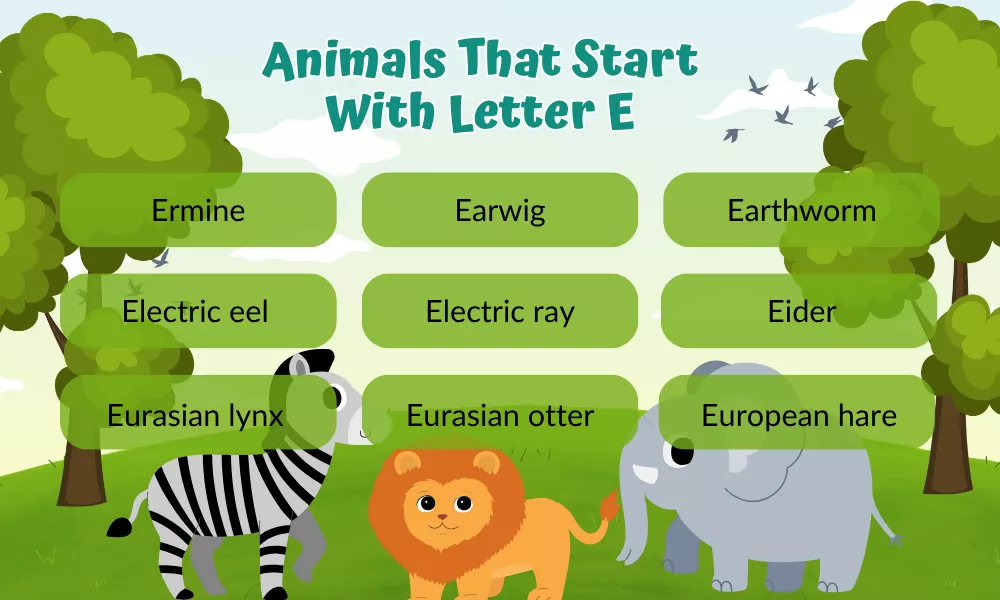
Rare and Unique Animals Starting With E
| Names | Description |
|---|---|
| Echidna | One of the few egg-laying mammals, covered in spines and equipped with a long snout. |
| Eland Antelope | A huge antelope recognized by its spiral horns and remarkable size. |
| Etruscan Shrew | One of the world’s smallest mammals, with an extremely high metabolism. |
| Eurasian Pygmy Shrew | A tiny insect-eating mammal with a pointed snout and very active lifestyle. |
| Eastern Quoll | A spotted carnivorous marsupial that is mainly active at night. |
| Eastern Barred Bandicoot | A small Australian marsupial with distinctive horizontal stripes across its rump. |
| Eastern Bettong | A small nocturnal marsupial that uses its powerful hind legs for hopping. |
| Eastern Bristlebird | A secretive ground-dwelling bird with a distinctive bristly appearance. |
| Echidna-Rayed Ray | A little-known ray with a flattened body adapted to life near the ocean floor. |
| Emerald Tree Boa | A striking green snake that coils around branches and hunts from trees. |
| Emerald Tree Monitor | A bright green monitor lizard with a slender body and excellent climbing ability. |
| Eyelash Viper | A colorful venomous snake named for the scale projections above its eyes. |
| Elongated Tortoise | A relatively slender tortoise with a long, yellowish-brown shell. |
| Egyptian Tortoise | A tiny desert tortoise adapted to survive with very limited water. |
| Egyptian Fruit Bat | A medium-sized fruit-eating bat with excellent echolocation abilities. |
| Emperor Tamarin | A small monkey famous for its long, flowing white mustache. |
| Ethiopian Wolf | Africa’s rarest carnivore and a specialized hunter of rodents. |
| Ethiopian Mountain Hare | A high-altitude hare adapted to cool, rugged environments. |
| Eurasian Lynx | A secretive wild cat with tufted ears and large paws. |
| European Mink | A rare semi-aquatic mustelid that has suffered major population declines. |
| European Hamster | A colorful burrowing rodent known for its food-storing behavior. |
| European Bison | A massive wild bovine and one of Europe’s most iconic large mammals. |
| Eurasian Beaver | A large semi-aquatic rodent that shapes its environment by constructing dams. |
| Eurasian Otter | A sleek, highly adaptable otter that hunts efficiently underwater. |
| Eagle Ray | A graceful ray with broad, wing-like fins that allow it to glide through water. |
| Eared Grebe | A small diving bird that develops striking dark and golden breeding plumage. |
| Eurasian Eagle-Owl | A huge nocturnal owl with powerful talons and prominent orange eyes. |
| Emperor Scorpion | One of the world’s largest scorpions, with massive pincers and a dark body. |
| Emperor Moth | A striking moth with large eyespots that can startle potential predators. |
| Eastern Hellbender | A large aquatic salamander with a flattened body and loose, wrinkled skin. |
Interesting Facts About Animals With E
- Elephants Have Remarkable Memories: Elephants have excellent memories and can recognize other elephants, remember important locations, and navigate long distances to find food and water.
- Echidnas Lay Eggs: Unlike most mammals, echidnas lay eggs instead of giving birth to live young. They also feed their babies with milk, making them truly unusual mammals.
- Emus Cannot Fly: Although emus are birds, their wings are too small for flight. Their powerful legs allow them to run at impressive speeds across the Australian landscape.
- Emperor Penguins Survive Extreme Cold: Emperor penguins endure some of the coldest conditions on Earth. They huddle together for warmth while males protect the eggs during the Antarctic winter.
- Eagles Have Incredible Eyesight: Many eagle species can spot potential prey from great distances because of their exceptionally sharp vision, which helps them hunt efficiently.
How to Teach Kids About Animals Start With E
- Use Pictures and Flashcards: Show children colorful pictures of animals such as elephants, eagles, emus, echidnas, and elk while saying each name aloud.
- Create an E Animal Alphabet Game: Ask kids to name as many animals beginning with E as they can. Turn it into a fun classroom or family competition.
- Add Sounds and Movements: Encourage children to imitate animal sounds or movements; for example, flap like an eagle or march like an elephant.
- Read Animal Stories: Choose age-appropriate books and stories featuring animals that start with E. This helps children connect new vocabulary with memorable characters and facts.
- Try a Matching or Drawing Activity: Have children match animal names with pictures or draw their favorite E animal. This combines vocabulary practice with creativity and makes learning more enjoyable.
FAQs
Conclusion
Learning about animals that start with E is a fun way to explore wildlife while improving vocabulary and general knowledge. From familiar animals like the elephant, eagle, elk, and emu to fascinating species such as the echidna, Ethiopian wolf, emperor penguin, and eastern hellbender, there are many incredible E animals to discover. These animals live in diverse habitats, including forests, deserts, grasslands, oceans, wetlands, and polar regions. Whether you’re creating an A–Z animal list, helping children with an alphabet activity, preparing a school project, or simply looking for interesting animal facts, this collection provides plenty of useful examples.