Animals That Start With F: Names & Description
Animals that start with the letter F represent a fascinating mix of species from different habitats and animal groups. From familiar creatures like Falcons, Ferrets, Flamingos, Foxes, and Frogs to lesser-known animals such as Fainting Goats, Fishing Cats, Fennec Foxes, and Fur Seals, there is plenty to discover. This collection of animals that start with F is designed to make learning about the animal kingdom easy, engaging, and enjoyable for kids, students, teachers, and animal lovers. Explore the list to discover unique animal names, interesting species, and fascinating facts about creatures from around the world.
Why Knowing Animals Starting With F Is Helpful
Learning animal names that start with F is a simple and enjoyable way to build vocabulary while developing knowledge about wildlife and nature. It can help children practice letter recognition, spelling, reading, and pronunciation, while also introducing them to different types of animals and their habitats. For students, teachers, quiz enthusiasts, and parents, an F-animal list can also be a useful resource for school projects, alphabet activities, classroom games, and general knowledge learning.
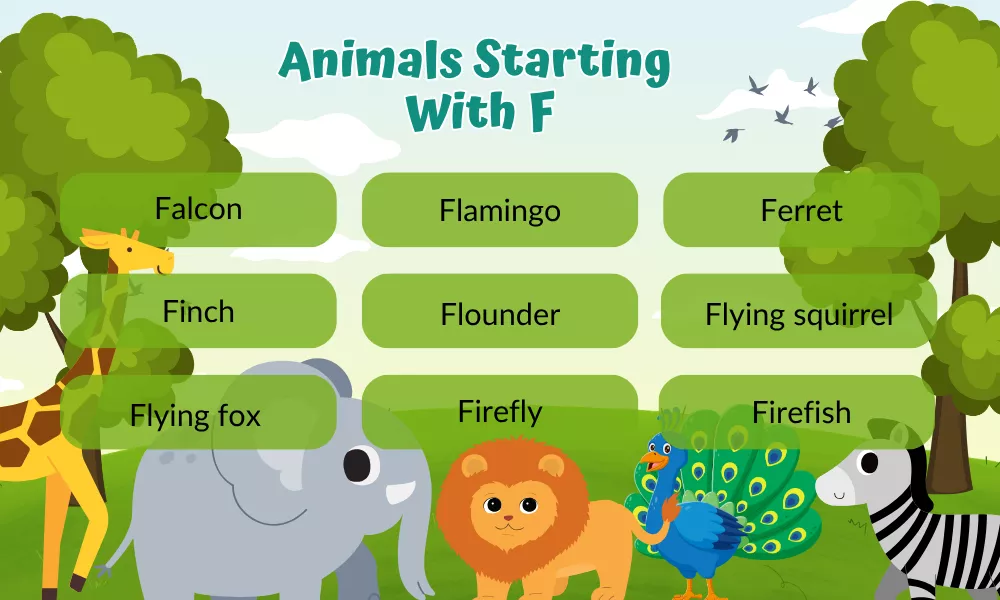
Common Animals That Start With F
- Falcon
Habitat: Mountains, cliffs, grasslands, and open countryside
Diet: Small birds, mammals, reptiles, and insects
Description: A powerful bird of prey known for its exceptional eyesight and incredible flying speed. - Ferret
Habitat: Grasslands, woodlands, farms, and human homes
Diet: Small mammals, birds, insects, and other animal-based foods
Description: A slender mammal related to weasels, known for its playful and curious nature. - Fox
Habitat: Forests, grasslands, mountains, deserts, and urban areas
Diet: Small mammals, birds, insects, fruits, and other foods
Description: An adaptable mammal recognized by its pointed face, bushy tail, and clever behavior. - Frog
Habitat: Ponds, wetlands, forests, riversides, and grasslands
Diet: Insects, worms, spiders, and other small invertebrates
Description: An amphibian with powerful hind legs that allow it to jump and swim efficiently. - Flamingo
Habitat: Shallow lakes, lagoons, marshes, and coastal wetlands
Diet: Algae, small crustaceans, insects, and aquatic organisms
Description: A long-legged wading bird famous for its pink or reddish feathers and curved bill. - Fish
Habitat: Oceans, rivers, lakes, ponds, and streams
Diet: Algae, plants, insects, plankton, and smaller aquatic animals
Description: A diverse group of aquatic animals that generally breathe through gills. - Fallow Deer
Habitat: Woodlands, grasslands, parks, and open forests
Diet: Grass, leaves, shoots, herbs, and fruits
Description: A graceful deer species with several coat color variations and distinctive antlers in males. - Fainting Goat
Habitat: Farms, pastures, and grasslands
Diet: Grass, leaves, shrubs, grains, and hay
Description: A domestic goat breed known for temporarily stiffening its muscles when startled. - Field Mouse
Habitat: Fields, meadows, farms, gardens, and woodland edges
Diet: Seeds, grains, fruits, plants, and small insects
Description: A small, quick-moving rodent commonly found in grassy and agricultural environments. - Flying Squirrel
Habitat: Forests and wooded areas
Diet: Nuts, seeds, fruits, fungi, and insects
Description: A squirrel that can glide between trees using a furry membrane stretched between its limbs. - Fishing Cat
Habitat: Wetlands, marshes, mangroves, and areas near rivers
Diet: Fish, frogs, crustaceans, rodents, and birds
Description: A medium-sized wild cat particularly adapted to hunting around water. - Fin Whale
Habitat: Oceans around the world
Diet: Krill, small fish, and squid
Description: One of the largest whale species, recognized for its long, streamlined body. - Fur Seal
Habitat: Coastal waters, rocky shores, and islands
Diet: Fish, squid, and crustaceans
Description: A marine mammal with dense insulating fur and visible external ears. - Flathead Catfish
Habitat: Freshwater rivers, lakes, and reservoirs
Diet: Fish, insects, crustaceans, and other aquatic animals
Description: A large freshwater catfish with a broad, flattened head. - Flounder
Habitat: Coastal seas, sandy bottoms, and muddy ocean floors
Diet: Small fish, crustaceans, worms, and mollusks
Description: A flat-bodied fish that often rests on one side of its body on the seafloor. - Flying Fox
Habitat: Tropical and subtropical forests, mangroves, and orchards
Diet: Fruits, nectar, flowers, and leaves
Description: A large fruit bat with fox-like facial features and excellent nighttime vision. - Fruit Bat
Habitat: Tropical forests, woodlands, caves, and gardens
Diet: Fruits, nectar, pollen, and flowers
Description: A group of bats that play important roles in pollination and seed dispersal. - Fire Salamander
Habitat: Damp forests, streamsides, and moist woodland environments
Diet: Insects, worms, slugs, and other small invertebrates
Description: A striking amphibian usually marked with bright yellow patterns against a dark body. - Fire-Bellied Toad
Habitat: Ponds, marshes, slow-moving streams, and wetlands
Diet: Insects, worms, and other small invertebrates
Description: A small amphibian known for its colorful underside and warty skin. - Fence Lizard
Habitat: Woodlands, rocky areas, fences, and dry grasslands
Diet: Insects, spiders, and other small arthropods
Description: A small lizard often seen basking on rocks, tree trunks, and fences. - Florida Softshell Turtle
Habitat: Freshwater lakes, rivers, ponds, and marshes
Diet: Fish, insects, crustaceans, frogs, and aquatic plants
Description: A freshwater turtle with a flexible, leathery shell rather than a hard shell. - Freshwater Turtle
Habitat: Rivers, lakes, ponds, streams, and wetlands
Diet: Aquatic plants, insects, fish, snails, and crustaceans
Description: A broad group of turtles adapted to living primarily in freshwater environments. - Freshwater Eel
Habitat: Rivers, streams, lakes, and coastal waters
Diet: Fish, insects, worms, crustaceans, and small aquatic animals
Description: A long, snake-like fish that can spend parts of its life in freshwater. - Four-Toed Hedgehog
Habitat: Grasslands, savannas, shrublands, and gardens
Diet: Insects, worms, small vertebrates, and fruits
Description: A small spiny mammal named for having four toes on each hind foot. - Field Vole
Habitat: Meadows, grasslands, fields, and woodland edges
Diet: Grass, roots, seeds, and other vegetation
Description: A small herbivorous rodent that lives in underground burrows and grassy habitats. - Forest Elephant
Habitat: Tropical forests and dense woodlands
Diet: Leaves, bark, fruits, roots, and vegetation
Description: A smaller African elephant adapted to life in dense forest environments. - Forest Buffalo
Habitat: Tropical forests, swamps, and dense woodland
Diet: Grass, leaves, herbs, and other vegetation
Description: A relatively small buffalo species with reddish-brown or dark coloration. - Forest Hog
Habitat: African rainforests, woodlands, and dense vegetation
Diet: Roots, fruits, grasses, leaves, and other plant matter
Description: A robust wild pig with a shaggy coat that lives mainly in forested habitats. - Florida Panther
Habitat: Forests, swamps, wetlands, and grasslands
Diet: Deer, wild hogs, raccoons, and smaller animals
Description: A population of pumas native to southern Florida. - Feral Cat
Habitat: Urban areas, farms, forests, grasslands, and abandoned properties
Diet: Rodents, birds, reptiles, insects, and other small prey
Description: A domestic cat living independently outdoors without regular human care. - Feral Pig
Habitat: Forests, grasslands, wetlands, farms, and scrublands
Diet: Roots, fruits, insects, small animals, and crops
Description: A wild-living pig that can adapt to a wide variety of environments. - Fiddler Crab
Habitat: Mudflats, mangroves, salt marshes, and sandy coastal areas
Diet: Algae, detritus, and tiny organic particles
Description: A small crab whose males have one greatly enlarged claw. - Fire Ant
Habitat: Grasslands, gardens, farms, forests, and disturbed soil
Diet: Insects, seeds, plant material, and small animals
Description: A social ant that lives in colonies and is known for its reddish coloration and painful sting. - Flea
Habitat: Animal fur, nests, carpets, soil, and household environments
Diet: Blood from animals
Description: A tiny, wingless insect capable of jumping remarkable distances relative to its body size. - Flatworm
Habitat: Oceans, freshwater, damp soil, and moist environments
Diet: Small animals, microorganisms, and organic matter
Description: A soft-bodied animal with a flattened shape and a simple body structure. - Flying Fish
Habitat: Warm ocean waters
Diet: Plankton and tiny marine organisms
Description: A marine fish with enlarged fins that allow it to glide above the water’s surface. - Frogfish
Habitat: Coral reefs, rocky seabeds, and marine environments
Diet: Fish, crustaceans, and other small marine animals
Description: A uniquely shaped fish that uses camouflage and a lure-like appendage to attract prey. - Frilled Lizard
Habitat: Woodlands, savannas, and tropical forests of northern Australia and nearby regions
Diet: Insects, spiders, small reptiles, and other animals
Description: A lizard famous for the large frill around its neck, which it displays when threatened. - Frilled Shark
Habitat: Deep ocean waters
Diet: Fish, squid, and other marine animals
Description: An unusual deep-sea shark with an elongated body and distinctive frilled gill slits. - Fox Squirrel
Habitat: Forests, woodland edges, parks, and urban areas
Diet: Nuts, seeds, fruits, fungi, and insects
Description: A large squirrel with a bushy tail and varied reddish, gray, or brown coloring. - Flying Lemur
Habitat: Tropical forests of Southeast Asia
Diet: Leaves, flowers, fruits, and plant material
Description: A tree-dwelling mammal that glides using a broad membrane connecting its limbs. - Flowerpot Snake
Habitat: Gardens, agricultural areas, forests, and moist soil
Diet: Tiny insects and other small invertebrates
Description: A very small, slender snake often found in soil and plant pots. - Fox Terrier
Habitat: Homes, farms, and rural areas
Diet: Commercial dog food and animal-based foods
Description: An energetic domestic dog breed originally developed for hunting foxes. - French Bulldog
Habitat: Homes and urban environments
Diet: Commercial dog food and suitable treats
Description: A compact companion dog known for its bat-like ears and friendly personality. - Field Spaniel
Habitat: Homes, farms, fields, and wooded areas
Diet: Commercial dog food and animal-based foods
Description: A medium-sized sporting dog originally bred for working in fields and woodland. - Finnish Spitz
Habitat: Homes, forests, and rural areas
Diet: Commercial dog food and animal-based foods
Description: A lively Finnish dog breed recognized by its fox-like appearance and reddish coat. - Flat-Coated Retriever
Habitat: Homes, farms, fields, and waterside environments
Diet: Commercial dog food and animal-based foods
Description: A friendly sporting dog with a long, flat coat and strong retrieving abilities. - Florida Scrub-Jay
Habitat: Florida scrublands and dry sandy habitats
Diet: Insects, acorns, fruits, and small animals
Description: A blue-gray bird that is strongly associated with Florida’s unique scrub ecosystem. - Firefly
Habitat: Meadows, forests, wetlands, and gardens
Diet: Many species eat small insects, snails, or other prey; some adults eat little or nothing
Description: A bioluminescent beetle famous for producing flashes of light. - Flecked Duck
Habitat: Freshwater wetlands, ponds, marshes, and lakes
Diet: Aquatic plants, seeds, insects, and small aquatic organisms
Description: A waterfowl species recognized for its patterned plumage and preference for wetland habitats.
List Of Birds That Start With F
- Falcon
Habitat: Cliffs, mountains, grasslands, deserts, and cities
Diet: Birds, rodents, reptiles, and insects
Description: A swift bird of prey with sharp talons and exceptional vision. - Flamingo
Habitat: Lakes, lagoons, marshes, and coastal wetlands
Diet: Algae, small crustaceans, and aquatic organisms
Description: A long-legged wading bird famous for its pink plumage. - Finch
Habitat: Forests, grasslands, gardens, and shrublands
Diet: Seeds, grains, fruits, and insects
Description: A group of small songbirds known for their seed-eating habits and varied colors. - Flycatcher
Habitat: Forests, woodland edges, gardens, and open areas
Diet: Flying insects, spiders, and other small invertebrates
Description: A group of insect-eating birds skilled at catching prey in midair. - Frigatebird
Habitat: Tropical oceans, islands, and coastal regions
Diet: Fish, squid, and marine animals
Description: A large seabird with long wings and a distinctive throat pouch in males. - Fulmar
Habitat: Open oceans and rocky coastal cliffs
Diet: Fish, squid, plankton, and marine organisms
Description: A seabird that spends much of its life over the ocean. - Flamingo Finch
Habitat: The Galápagos Islands, especially dry and rocky areas
Diet: Seeds, insects, and plant material
Description: A Darwin’s finch species adapted to the unique environments of the Galápagos. - Forest Falcon
Habitat: Tropical forests and woodland
Diet: Birds, reptiles, mammals, and insects
Description: A forest-dwelling raptor adapted to hunting beneath the tree canopy. - Fish Eagle
Habitat: Rivers, lakes, wetlands, and coastal regions
Diet: Primarily fish, along with other aquatic prey
Description: A powerful eagle adapted to catching fish near water. - Fishing Owl
Habitat: Rivers, lakes, wetlands, and forested waterways
Diet: Fish, frogs, crabs, and aquatic animals
Description: A large owl that specializes in hunting around freshwater habitats. - Forest Owlet
Habitat: Dry deciduous forests and woodland
Diet: Insects, lizards, rodents, and small birds
Description: A small, rare owl native to parts of central India. - Ferruginous Duck
Habitat: Freshwater lakes, marshes, ponds, and wetlands
Diet: Aquatic plants, seeds, insects, and small aquatic animals
Description: A diving duck with rich brown plumage. - Fieldfare
Habitat: Woodlands, farmland, hedgerows, and open countryside
Diet: Berries, fruits, insects, and worms
Description: A large thrush with a gray head and chestnut-colored back. - Firecrest
Habitat: Coniferous forests, woodlands, and gardens
Diet: Insects, spiders, and other tiny invertebrates
Description: A tiny songbird with a bright crown and active feeding behavior. - Flame Bowerbird
Habitat: Rainforests and wooded areas of New Guinea
Diet: Fruits, insects, and plant material
Description: A colorful bowerbird whose males build display structures to attract mates. - Flame Robin
Habitat: Forests, woodland edges, and open areas of Australia
Diet: Insects and other small invertebrates
Description: A small Australian robin with bright orange-red coloring on the male. - Flameback Woodpecker
Habitat: Tropical forests, plantations, and wooded areas
Diet: Insects, larvae, fruits, and other food found in trees
Description: A colorful woodpecker known for its striking back and strong bill. - Flammulated Owl
Habitat: Mountain forests and woodland
Diet: Insects, spiders, and other small arthropods
Description: A tiny owl native to parts of North and Central America. - Fork-tailed Flycatcher
Habitat: Grasslands, savannas, agricultural areas, and open woodland
Diet: Flying insects and small fruits
Description: A striking flycatcher with a very long, forked tail. - Fork-tailed Swift
Habitat: Open skies over forests, grasslands, and urban areas
Diet: Flying insects
Description: A fast-flying bird with a deeply forked tail that spends much of its time airborne. - Freckled Nightjar
Habitat: Dry forests, scrublands, and open woodland
Diet: Flying insects
Description: A nocturnal bird with cryptic, speckled plumage that helps it blend into its surroundings. - Freckled Duck
Habitat: Freshwater lakes, wetlands, swamps, and marshes
Diet: Aquatic plants, seeds, algae, and invertebrates
Description: An Australian waterfowl species with dark, finely spotted plumage. - Fruit Dove
Habitat: Tropical forests and wooded islands
Diet: Fruits, berries, and seeds
Description: A colorful group of pigeons and doves that mainly eat fruit. - Fruitcrow
Habitat: Tropical forests of Central and South America
Diet: Fruits, insects, and small animals
Description: A forest bird known for its dark plumage and distinctive calls. - Fulvous Whistling Duck
Habitat: Marshes, ponds, flooded fields, and shallow wetlands
Diet: Seeds, aquatic plants, grains, and small invertebrates
Description: A warm-colored whistling duck often found in freshwater wetlands. - Fuscous Flycatcher
Habitat: Tropical forests, woodland, and forest edges
Diet: Insects and other small arthropods
Description: A small insect-eating bird with subdued brownish plumage. - Fan-tailed Cuckoo
Habitat: Forests, woodlands, and dense shrubland
Diet: Insects, caterpillars, and small invertebrates
Description: A cuckoo with a distinctive fanned tail and insect-based diet. - Fan-tailed Warbler
Habitat: Grasslands, scrub, and open woodland
Diet: Insects and small invertebrates
Description: A small songbird named for its characteristic fan-shaped tail. - Fairy Flycatcher
Habitat: Forests and woodland habitats
Diet: Small insects and other invertebrates
Description: A tiny insect-eating bird known for its delicate appearance and quick movements. - Field Sparrow
Habitat: Fields, grasslands, shrublands, and woodland edges
Diet: Seeds, grains, insects, and berries
Description: A small North American sparrow with a pink bill and reddish crown.
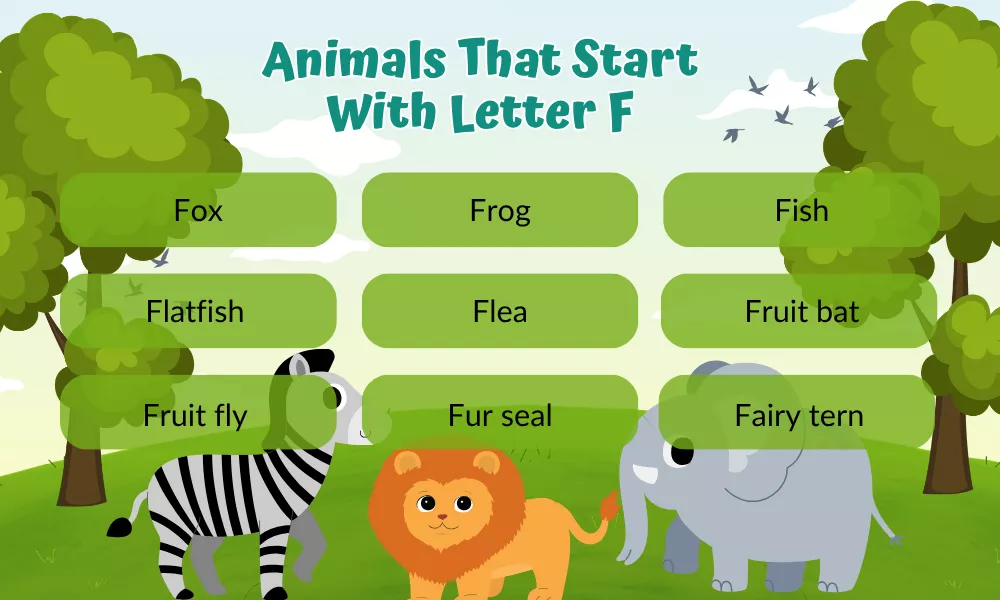
Rare and Unique Animals Starting With F
| Names | Description |
|---|---|
| Fossa | A rare carnivorous mammal found only in Madagascar, known for its long body, tail, and cat-like appearance. |
| Fennec Fox | A tiny desert fox famous for its enormous ears, which help with hearing and heat regulation. |
| Fijian Banded Iguana | A striking green iguana native to islands of Fiji and known for its vivid coloration and long tail. |
| False Gharial | A long-snouted crocodilian from Southeast Asia that is adapted to hunting fish and other aquatic prey. |
| Frilled Shark | A mysterious deep-sea shark with an eel-like body and unusual frilled gill openings. |
| Flowerpot Snake | A tiny, slender snake that often lives in soil and can be transported unintentionally in potted plants. |
| Fishing Cat | A wild cat with strong swimming abilities that specializes in hunting fish and other aquatic animals. |
| Fiordland Crested Penguin | A rare penguin from New Zealand recognized by its yellow eyebrow-like crest feathers. |
| Fijian Ground Frog | A little-known frog native to Fiji that spends much of its life in forested habitats. |
| Flat-Headed Cat | A rare small wild cat from Southeast Asia with a flattened forehead and strong adaptation to wetland habitats. |
| Forest Musk Deer | A small deer-like mammal found in Asian forests and notable for its lack of antlers and elongated canine teeth in males. |
| Formosan Rock Macaque | A monkey native to Taiwan, recognized for its expressive face and ability to live in mountainous forests. |
| Fossorial Water Rat | A specialized aquatic rodent adapted to digging and living around waterways. |
| Four-Eyed Opossum | A small South American marsupial named for the pale markings above its eyes that resemble an additional pair of eyes. |
| False Killer Whale | A large oceanic dolphin with a streamlined body and strong social behavior. |
| Fairy Armadillo | One of the world’s smallest armadillos, known for its pinkish shell and burrowing lifestyle in sandy soil. |
| Fire Salamander | A brightly patterned European salamander usually marked with yellow or orange against a dark body. |
| Flat-Backed Spider Tortoise | A small, critically threatened tortoise from Madagascar with a distinctive flattened shell. |
| Forest Cobra | A highly venomous African snake that inhabits forests and is capable of climbing trees. |
| Fringe-Toed Lizard | A desert lizard with specialized scales along its toes that help it move quickly across loose sand. |
| False Map Turtle | A freshwater turtle with intricate shell markings that resemble the patterns found on maps. |
| Fijian Crested Iguana | A rare Pacific island reptile with a prominent crest and vivid green coloration. |
| Furry Armadillo | A small South American armadillo covered with hairier body structures than many other armadillo species. |
| Falcated Duck | A distinctive Asian duck named for the long, curved sickle-shaped feathers of the male. |
| Fire Skink | A brightly colored African skink with red, orange, black, and gold tones. |
| Flying Snake | A remarkable tree-dwelling snake that can flatten its body and glide between branches. |
| Frilled Lizard | An Australian lizard that dramatically expands a large neck frill when threatened or displaying. |
| Fossa-Like Malagasy Carnivore | A general term sometimes used when discussing unusual Malagasy carnivores related to the fossa and other endemic predators. |
| Fairy Possum | A rare name associated with small, tree-dwelling possums found in Australian forest environments. |
| False Vampire Bat | A group of large bats that differ from true vampire bats and often prey on insects, frogs, birds, or other small animals. |
Interesting Facts About Animals With F
- Falcons Are Speedy Hunters: Peregrine falcons are famous for their incredible diving speed, making them among the fastest animals in the world during a hunting dive.
- Flamingos Get Their Color From Food: Flamingos develop their pink or reddish coloring from pigments called carotenoids found in the algae and small organisms they eat.
- Flying Squirrels Can Glide: Flying squirrels don’t actually fly like birds. Instead, they use a flap of skin between their limbs to glide from one tree to another.
- Fennec Foxes Have Huge Ears: The fennec fox has exceptionally large ears that help it detect prey and release heat in its hot desert environment.
- Fireflies Produce Their Own Light: Fireflies create flashes of light through a chemical reaction inside their bodies. These glowing signals are commonly used to communicate with other fireflies.
How to Teach Kids About Animals Start With F
- Use Colorful Pictures: Show children pictures of familiar F animals such as Fox, Frog, Flamingo, and Falcon to make learning more visual and memorable.
- Practice the Letter F: Have kids say and write the letter F while repeating animal names, such as F is for Fox and F is for Frog.
- Add Animal Sounds: Encourage children to imitate or listen to animal sounds while learning about each species. This can make lessons more interactive and fun.
- Create an F-Animal Matching Game: Prepare cards featuring animal names and pictures, then have children match each animal with the correct name or habitat.
- Encourage Drawing and Crafts: Ask children to draw their favorite animal starting with F or create simple animal crafts. This combines creativity with vocabulary and nature learning.
FAQs
Conclusion
Animals that start with F showcase just how diverse and fascinating the animal kingdom can be. From familiar animals such as the fox, frog, fish, ferret, flamingo, and falcon to unusual species like the fossa, fennec fox, flying squirrel, fishing cat, and frilled shark, there are plenty of interesting creatures to discover. These animals live in a wide range of habitats, including forests, deserts, oceans, wetlands, grasslands, and even urban environments. Whether you’re looking for animals that start with F for kids, school projects, vocabulary practice, quizzes, or general knowledge, this list provides a useful starting point.