Animals That Start With B: Names, Facts, & Description
Animals that start with the letter B represent an incredible variety of wildlife found across the world. From powerful mammals like the Bengal Tiger, Bear, and Bison to fascinating creatures such as the Black Mamba, Barracuda, Bee, and Butterfly Fish, the letter B introduces us to species from nearly every animal group. Exploring these animals is a fun and educational way to learn about nature, biodiversity, and the unique characteristics that make each species special. Whether you’re a student, wildlife enthusiast, or parent teaching young children the alphabet, this collection of animals beginning with B offers interesting facts, pictures, and learning opportunities for all ages.
Why Knowing Animals Starting With B Is Helpful
Learning about animals that start with the letter B helps expand vocabulary, improve alphabet recognition, and build a greater appreciation for wildlife. For young children, associating letters with animals makes learning more engaging and memorable. For students and nature lovers, discovering different B animals provides insight into various habitats, ecosystems, and animal behaviors. It also encourages curiosity about the natural world while supporting educational activities, research projects, and wildlife awareness.
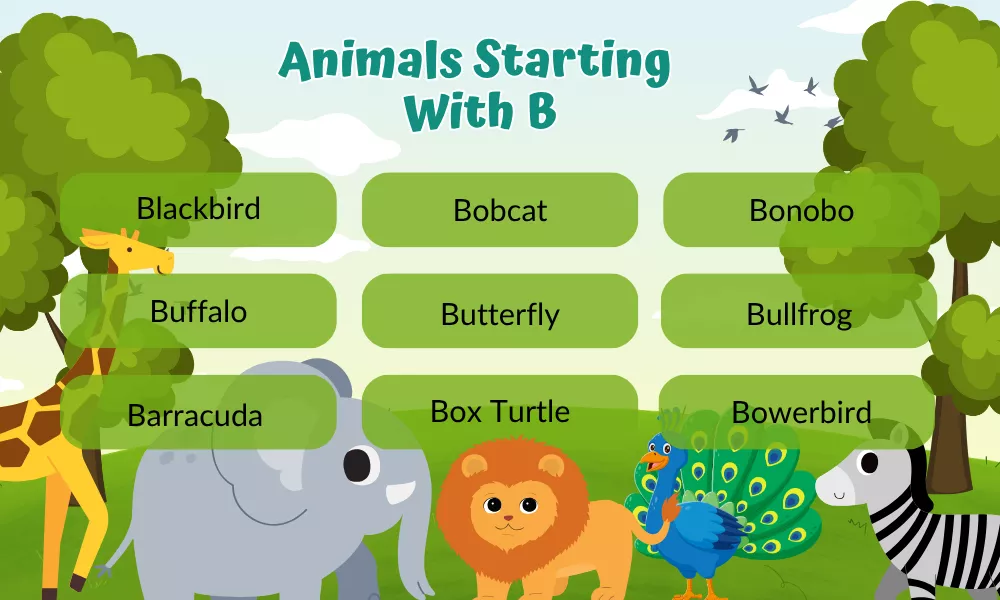
Common Animals That Start With B
- Beaver
Habitat: Rivers, streams, lakes, and wetlands
Diet: Bark, twigs, leaves, and aquatic plants
Description: A large rodent known for building dams and lodges. - Bison
Habitat: Grasslands and prairies
Diet: Grasses and herbs
Description: One of the largest land mammals in North America. - Bear
Habitat: Forests, mountains, and tundra
Diet: Fish, berries, insects, and small mammals
Description: A powerful omnivorous mammal found across the world. - Bat
Habitat: Caves, forests, and urban areas
Diet: Insects, fruit, nectar, or blood (depending on species)
Description: The only mammal capable of sustained flight. - Bobcat
Habitat: Forests, swamps, and deserts
Diet: Rabbits, rodents, and birds
Description: A medium-sized wild cat with a short tail. - Bonobo
Habitat: Central African rainforests
Diet: Fruits, leaves, and insects
Description: An intelligent great ape closely related to chimpanzees. - Buffalo
Habitat: Grasslands, savannas, and wetlands
Diet: Grasses
Description: A large grazing mammal native to Africa and Asia. - Boar
Habitat: Forests and grasslands
Diet: Roots, fruits, insects, and small animals
Description: The wild ancestor of domestic pigs. - Bull Shark
Habitat: Coastal waters, rivers, and estuaries
Diet: Fish, rays, and crustaceans
Description: A shark capable of surviving in freshwater. - Barracuda
Habitat: Tropical and subtropical oceans
Diet: Fish and squid
Description: A fast predator with sharp teeth. - Blackbird
Habitat: Gardens, forests, and parks
Diet: Insects, worms, and berries
Description: A common songbird known for its beautiful calls. - Butterfly Fish
Habitat: Coral reefs
Diet: Coral polyps and small invertebrates
Description: A colorful tropical fish. - Bee
Habitat: Meadows, gardens, and forests
Diet: Nectar and pollen
Description: An important pollinator for flowering plants. - Badger
Habitat: Grasslands and woodlands
Diet: Worms, insects, and rodents
Description: A burrowing mammal with strong claws. - Bullfrog
Habitat: Ponds, lakes, and marshes
Diet: Insects, fish, and small amphibians
Description: One of the largest frog species. - Boa Constrictor
Habitat: Tropical forests
Diet: Birds and mammals
Description: A large snake that kills prey by constriction. - Bluegill
Habitat: Freshwater lakes and ponds
Diet: Insects and small aquatic creatures
Description: A popular freshwater game fish. - Basilisk
Habitat: Tropical rainforests
Diet: Insects, fruits, and small vertebrates
Description: Known as the “Jesus Christ Lizard” for running on water. - Bandicoot
Habitat: Forests and grasslands
Diet: Insects, roots, and fungi
Description: A small marsupial native to Australia. - Bream
Habitat: Rivers, lakes, and coastal waters
Diet: Insects and aquatic plants
Description: A common fish valued by anglers. - Black Mamba
Habitat: Savannas and rocky areas
Diet: Rodents and birds
Description: One of Africa’s fastest snakes. - Bottlenose Dolphin
Habitat: Coastal oceans and seas
Diet: Fish and squid
Description: An intelligent and social marine mammal. - Beetle
Habitat: Nearly every habitat on Earth
Diet: Plants, fungi, and insects
Description: The largest group of insects. - Bongo
Habitat: African rainforests
Diet: Leaves, bark, and fruits
Description: A striking antelope with white stripes. - Binturong
Habitat: Southeast Asian forests
Diet: Fruits, birds, and small mammals
Description: Also known as the bearcat. - Beluga Whale
Habitat: Arctic and sub-Arctic waters
Diet: Fish and crustaceans
Description: A white whale famous for its vocal sounds. - Blue Whale
Habitat: Oceans worldwide
Diet: Krill
Description: The largest animal ever known to exist. - Barnacle
Habitat: Rocky coastlines and ships
Diet: Plankton
Description: A crustacean that permanently attaches to surfaces. - Bumblebee
Habitat: Meadows and gardens
Diet: Nectar and pollen
Description: A fuzzy and efficient pollinator. - Box Turtle
Habitat: Forests and grasslands
Diet: Fruits, insects, and mushrooms
Description: A turtle that can completely close its shell. - Brown Trout
Habitat: Cold rivers, streams, and freshwater lakes
Diet: Insects, crustaceans, worms, and small fish.
Description: A popular freshwater fish known for its brown body covered with dark and red spots. - Black Swan
Habitat: Lakes, wetlands, rivers, and lagoons
Diet: Aquatic plants, algae, and grasses.
Description: A graceful waterbird with striking black feathers and a bright red bill. - Bullfinch
Habitat: Woodlands, hedgerows, orchards, and gardens
Diet: Seeds, buds, berries, and fruits.
Description: A colorful songbird recognized by its plump body and bright chest. - Bushbaby
Habitat: African forests, woodlands, and savannas
Diet: Insects, fruits, nectar, and tree sap.
Description: A small nocturnal primate with large eyes and powerful jumping abilities. - Bluebird
Habitat: Open woodlands, grasslands, and suburban areas
Diet: Insects, berries, and fruits.
Description: A brightly colored songbird famous for its beautiful blue plumage. - Basking Shark
Habitat: Temperate oceans worldwide
Diet: Plankton.
Description: The second-largest fish in the world and a harmless filter feeder. - Black Bear
Habitat: Forests, mountains, and swamps
Diet: Berries, nuts, fish, insects, and small mammals.
Description: A highly adaptable bear species found throughout North America. - Bactrian Camel
Habitat: Deserts, steppes, and rocky plains
Diet: Shrubs, grasses, and desert vegetation.
Description: A two-humped camel adapted to extreme hot and cold climates. - Batfish
Habitat: Coral reefs, lagoons, and coastal waters
Diet: Algae, plankton, and small invertebrates
Description: A uniquely shaped reef fish with a flattened body. - Brook Trout
Habitat: Cold streams, rivers, and mountain lakes
Diet: Insects, crustaceans, and small fish
Description: A colorful freshwater fish that thrives in clean, cool water. - Blue Tang
Habitat: Tropical coral reefs
Diet: Algae and plankton
Description: A bright blue reef fish made famous by the character “Dory.” - Blackbuck
Habitat: Grasslands and open plains
Diet: Grasses, herbs, and crops
Description: A fast-running antelope native to the Indian subcontinent. - Banana Spider
Habitat: Tropical forests and gardens
Diet: Flying insects and other small arthropods
Description: A large spider known for weaving strong golden webs. - Burmese Python
Habitat: Forests, marshes, and grasslands
Diet: Birds, mammals, and reptiles
Description: One of the largest snake species in the world. - Burro
Habitat: Deserts, grasslands, and farms
Diet: Grasses, shrubs, and hay
Description: A domesticated donkey valued for its strength and endurance. - Blue Crab
Habitat: Estuaries, bays, and coastal waters
Diet: Fish, mollusks, plants, and detritus
Description: A commercially important crab recognized by its bright blue claws. - Brown Pelican
Habitat: Coastal shores, estuaries, and beaches
Diet: Fish
Description: A large seabird famous for its dramatic plunge-diving behavior. - Barn Owl
Habitat: Farmlands, grasslands, and open countryside
Diet: Rodents, mice, and small mammals
Description: A nocturnal owl with a distinctive heart-shaped face. - Buzzard
Habitat: Woodlands, farmland, and open country
Diet: Small mammals, birds, reptiles, and carrion
Description: A broad-winged bird of prey with excellent soaring abilities. - Blue Jay
Habitat: Forests, parks, and suburban areas
Diet: Acorns, seeds, insects, and fruits
Description: An intelligent and vocal bird known for its brilliant blue feathers.
List Of Birds That Start With B
- Bald Eagle
Habitat: Lakes, rivers, and coastlines
Diet: Fish, birds, and carrion
Description: America’s national bird known for its white head. - Barn Owl
Habitat: Farmlands and grasslands
Diet: Rodents and small mammals
Description: A nocturnal hunter with exceptional hearing. - Blue Jay
Habitat: Forests and suburban areas
Diet: Nuts, seeds, and insects
Description: An intelligent bird with bright blue feathers. - Blackbird
Habitat: Woodlands and gardens
Diet: Worms, insects, and fruit
Description: A melodious songbird. - Buzzard
Habitat: Open countryside and forests
Diet: Small mammals and carrion
Description: A broad-winged bird of prey. - Black Swan
Habitat: Lakes and wetlands
Diet: Aquatic plants
Description: An elegant waterbird native to Australia. - Bluebird
Habitat: Open woodlands and meadows
Diet: Insects and berries
Description: A colorful songbird. - Bullfinch
Habitat: Woodlands and hedgerows
Diet: Seeds and buds
Description: A small bird with a brightly colored chest. - Brown Pelican
Habitat: Coastal waters
Diet: Fish
Description: Famous for spectacular plunge-diving. - Black Vulture
Habitat: Forests and open land
Diet: Carrion
Description: A scavenger that helps clean ecosystems. - Bee-Eater
Habitat: Open woodlands, grasslands, and riverbanks
Diet: Bees, wasps, dragonflies, and flying insects
Description: A brightly colored bird known for catching insects in mid-air. - Brambling
Habitat: Forests, parks, and farmland
Diet: Seeds, berries, and insects
Description: A migratory finch recognized by its orange breast and white belly. - Black-Capped Chickadee
Habitat: Deciduous forests and gardens
Diet: Seeds, insects, and berries
Description: A small songbird with a distinctive black cap and cheerful call. - Black Kite
Habitat: Open countryside, wetlands, and cities
Diet: Fish, carrion, rodents, and insects
Description: A widespread bird of prey with excellent soaring abilities. - Black Stork
Habitat: Forests near rivers and wetlands
Diet: Fish, frogs, and insects
Description: A shy wading bird with glossy black plumage. - Black Guillemot
Habitat: Rocky coastlines and northern seas
Diet: Fish, crustaceans, and mollusks
Description: A seabird known for its black feathers and bright red feet. - Blue Grosbeak
Habitat: Shrublands, fields, and woodland edges
Diet: Seeds, grains, and insects
Description: A vibrant blue songbird found across North America. - Brown Thrasher
Habitat: Thickets, hedgerows, and woodlands
Diet: Insects, seeds, and berries
Description: A bird famous for its extensive song repertoire. - Black Tern
Habitat: Marshes, lakes, and coastal wetlands
Diet: Insects, fish, and crustaceans
Description: A graceful seabird with dark breeding plumage. - Broadbill
Habitat: Tropical forests
Diet: Insects, fruits, and small animals
Description: A colorful bird known for its unusually broad beak. - Black Skimmer
Habitat: Coastal beaches, estuaries, and rivers
Diet: Small fish and crustaceans
Description: Uses its elongated lower bill to skim prey from the water’s surface. - Black-Necked Stilt
Habitat: Wetlands, mudflats, and shallow lakes
Diet: Insects, crustaceans, and aquatic invertebrates
Description: A wading bird with exceptionally long pink legs. - Blue Heron
Habitat: Marshes, rivers, lakes, and coastlines
Diet: Fish, amphibians, and small mammals
Description: A large wading bird known for its patience while hunting. - Black-Crowned Night Heron
Habitat: Wetlands, ponds, and rivers
Diet: Fish, frogs, and insects
Description: A nocturnal heron with a stocky build. - Bowerbird
Habitat: Forests and woodlands of Australia and New Guinea
Diet: Fruits, insects, and seeds
Description: Famous for building elaborate structures to attract mates. - Black-Footed Albatross
Habitat: Open oceans and remote islands
Diet: Fish, squid, and crustaceans
Description: A large seabird capable of traveling thousands of miles. - Black Francolin
Habitat: Grasslands, farmland, and scrublands
Diet: Seeds, shoots, and insects
Description: A ground-dwelling game bird with striking plumage. - Brown Booby
Habitat: Tropical islands and coastal waters
Diet: Fish and squid
Description: A diving seabird known for spectacular fishing dives. - Black Woodpecker
Habitat: Mature forests and woodlands
Diet: Ants, beetles, and larvae
Description: Europe’s largest woodpecker species. - Blue-Winged Teal
Habitat: Marshes, ponds, and wetlands
Diet: Seeds, aquatic plants, and insects
Description: A small migratory duck with distinctive blue wing patches.
Rare and Unique Animals Starting With B
- Binturong
Habitat: Southeast Asian rainforests
Diet: Fruits, birds, and small mammals Description: A tree-dwelling mammal that smells like buttered popcorn. - Bongo
Habitat: Dense African forests
Diet: Leaves, fruits, and bark Description: The world’s largest forest antelope. - Babirusa
Habitat: Indonesian forests and swamps
Diet: Fruits, roots, and leaves Description: A wild pig with curved tusks that grow upward. - Bilby
Habitat: Australian deserts
Diet: Insects, seeds, and fungi Description: A rabbit-like marsupial with long ears. - Blue Dragon
Habitat: Open oceans
Diet: Jellyfish and siphonophores Description: A tiny sea slug with a dragon-like appearance. - Bush Dog
Habitat: South American forests
Diet: Rodents and small mammals Description: A rare wild dog adapted for swimming. - Blobfish
Habitat: Deep ocean waters
Diet: Small crustaceans Description: Famous for its unusual jelly-like appearance. - Banded Palm Civet
Habitat: Southeast Asian forests
Diet: Fruits and insects Description: A nocturnal mammal rarely seen in the wild. - Burrowing Frog
Habitat: Grasslands and dry regions
Diet: Insects Description: Spends much of its life underground. - Burrowing Owl
Habitat: Grasslands and deserts
Diet: Insects and rodents Description: A ground-dwelling owl that nests in burrows. - Bornean Orangutan
Habitat: Tropical rainforests of Borneo.
Diet: Fruits, leaves, bark, and insects. Description: A critically endangered great ape with remarkable intelligence. - Bornean Peacock-Pheasant
Habitat: Dense tropical forests
Diet: Seeds, insects, and fruits. Description: A rare pheasant with beautiful iridescent feathers. - Blue-Footed Booby
Habitat: Coastal islands and rocky shores
Diet: Fish and squid. Description: Famous for its bright blue feet and unique courtship dance. - Black-Footed Ferret
Habitat: North American prairies
Diet: Prairie dogs and rodents. Description: One of the rarest mammals in North America. - Brazilian Treehopper
Habitat: Tropical forests
Diet: Plant sap. Description: An unusual insect with bizarre horn-like structures. - Blind Cave Fish
Habitat: Underground caves and streams
Diet: Small aquatic organisms. Description: A fish species that evolved without functional eyes. - Baikal Seal
Habitat: Lake Baikal, Russia
Diet: Fish and crustaceans. Description: The world’s only freshwater seal species. - Bush Viper
Habitat: African rainforests
Diet: Rodents, frogs, and birds. Description: A venomous snake with striking keeled scales. - Bamboo Shark
Habitat: Coral reefs and sandy ocean floors
Diet: Crustaceans, worms, and small fish. Description: A small bottom-dwelling shark often seen in aquariums. - Bearded Vulture
Habitat: Mountain ranges and cliffs
Diet: Bones and carrion. Description: One of the few birds that feeds primarily on bones. - Brown Hyena
Habitat: Deserts and dry savannas
Diet: Carrion, fruits, and small animals. Description: A rare scavenger found in southern Africa. - Bat-Eared Fox
Habitat: African grasslands and savannas
Diet: Termites, insects, and small vertebrates. Description: A fox with enormous ears used for detecting prey. - Black Rain Frog
Habitat: Moist forests of South Africa
Diet: Insects and worms. Description: A small frog famous for its grumpy facial expression. - Burmese Star Tortoise
Habitat: Dry forests and scrublands
Diet: Grasses, leaves, and fruits. Description: A critically endangered tortoise with star-like shell patterns. - Blue-Ringed Octopus
Habitat: Tide pools and coral reefs
Diet: Crabs, shrimp, and small fish. Description: A tiny octopus with highly potent venom. - Bornean Slow Loris
Habitat: Tropical forests
Diet: Fruits, insects, and tree gum. Description: A nocturnal primate with a venomous bite. - Bonnethead Shark
Habitat: Coastal waters and estuaries
Diet: Crabs, shrimp, and seagrass. Description: The smallest hammerhead shark species. - Black-Crested Gibbon
Habitat: Forests of Southeast Asia
Diet: Fruits, leaves, and flowers. Description: An agile tree-dwelling ape known for its loud calls. - Bicolored-Spined Porcupine
Habitat: Tropical forests
Diet: Fruits, bark, and leaves. Description: A rare porcupine covered in sharp defensive quills. - Buru Babirusa
Habitat: Indonesian forests
Diet: Fruits, roots, and vegetation. Description: A rare wild pig with distinctive upward-curving tusks.
Interesting Facts About Animals With B
- Blue Whales Are the Largest Animals Ever
The Blue Whale is the largest animal known to have lived on Earth. It can grow up to 100 feet (30 meters) long and weigh more than 200 tons, making it even bigger than the largest dinosaurs. - Beavers Are Nature’s Engineers
Beavers build dams and lodges using branches, mud, and stones. Their construction projects can create wetlands that provide habitats for many other animals. - Basilisks Can Run on Water
The Basilisk Lizard is often called the “Jesus Christ Lizard” because it can sprint across the surface of water for short distances using its powerful legs and specialized feet. - Bats Are the Only Flying Mammals
Unlike flying squirrels that glide, Bats are the only mammals capable of true powered flight. Some species can also use echolocation to navigate and hunt in complete darkness. - Bison Can Run Surprisingly Fast
Despite their massive size, Bison can reach speeds of up to 35 miles (56 kilometers) per hour and are excellent swimmers when crossing rivers.
How to Teach Kids About Animals Start With B
- Use Animal Picture Cards
Show children colorful pictures of animals like Bear, Beaver, Bat, Bison, and Butterfly. Visual learning helps kids remember animal names and the letter B more easily. - Practice Animal Sounds
Encourage kids to imitate animal sounds and movements. Pretending to flap like a bat or stomp like a bear makes learning fun and interactive. - Read Alphabet Animal Books
Choose children’s books that focus on the alphabet and animals. Reading stories about B animals helps improve vocabulary and letter recognition. - Play Matching and Sorting Games
Create simple games where children match animal pictures to names or sort animals that begin with the letter B. This reinforces both spelling and identification skills. - Watch Educational Nature Videos
Short wildlife videos featuring animals such as Blue Whales, Beavers, and Bald Eagles can spark curiosity and help children learn about habitats, diets, and behaviors in an engaging way.
FAQs
Conclusion
Animals that start with the letter B showcase the incredible diversity of the animal kingdom. From familiar creatures like the Bear, Beaver, Bat, Bison, and Butterfly to unique species such as the Binturong, Babirusa, and Bongo, these animals can be found in a wide range of habitats across the globe. Each species plays an important role in its ecosystem, whether it’s pollinating plants, controlling pest populations, dispersing seeds, or maintaining the balance of nature. Learning about animals that begin with B is not only a fun way to improve alphabet recognition and vocabulary but also an excellent opportunity to explore wildlife, habitats, diets, and animal behaviors.